Provenance research—the systematic tracing of an artwork's ownership history from its creation to the present—is the single most practical tool a buyer has for assessing authenticity, legal ownership, and value before a purchase. The process moves through three phases: examining the physical object, reconstructing the document trail, and verifying claims against public databases. A complete, gap-free chain of ownership is the goal; unexplained gaps, inconsistent documents, or an appearance in a stolen-art registry are the warning signs that should slow any acquisition down.
Understanding Art Provenance: Why It Matters for Buyers
Derived from the French provenir, "to come from," provenance research involves tracing and documenting the ownership history of an object from its creation by the artist to the present, according to a research guide from the Saint Louis Art Museum. The museum notes that the discipline relies on both physical examination of the object and visual and textual documentation. For a buyer, this means provenance is not a single certificate but a reconstructed argument built from the object itself and the paper trail behind it.
The stakes are concrete. A guide from the University of Texas Libraries explains that provenance helps determine legal ownership, ensuring a work has not been stolen, looted, or illegally acquired, and establishes a clear path of custody from one party to another. The Philadelphia Museum of Art's research guide frames provenance as the "life story" of the object, fundamental to determining its authenticity and value. Provenance also carries market weight beyond legality: a 2025 study by Elena Stepanova and Marta Sedino in the Journal of Cultural Economics used provenance information from Christie's and Sotheby's contemporary art auctions between 2000 and 2018 as systematic data for analyzing the market—evidence that auction houses themselves treat documented ownership history as a selling point.
Phase 1: Physical Examination of the Artwork
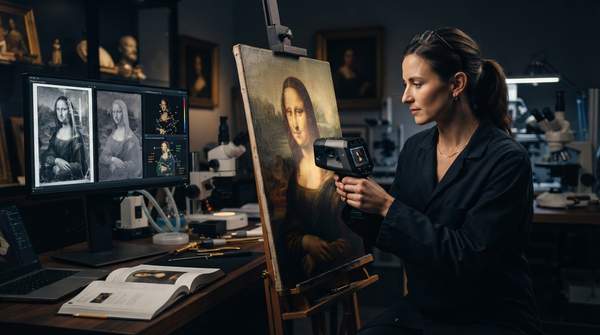
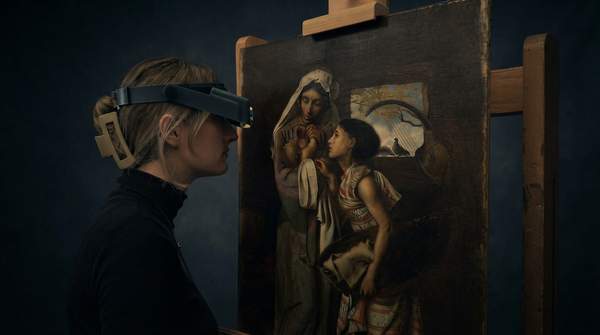
Provenance research starts with the artwork itself. CODART, the international curators' network for Dutch and Flemish art, describes the physical object as a primary source that can provide a wealth of data, and advises that the front and back of the artwork, as well as its frame, be minutely examined and photographed. The reverse of a canvas or the back of a panel often carries the densest evidence: gallery stock numbers, exhibition labels, customs stamps, collector marks, and old repair or lining inscriptions.
These physical marks provide initial clues for further research rather than conclusions in themselves. A dealer's label can be matched against dealer records; a collector's mark can be identified through published reference works on collectors' marks, which the NYU research guide lists among its core resource categories alongside artist signatures and photo archives. Each mark found on the object becomes a lead to pursue in the second phase.
Phase 2: Tracing the Document Trail
The document trail forms the backbone of provenance. The documents to request and examine include bills of sale, gallery records, exhibition catalogs, and scholarly publications that mention the work. Auction catalogs are particularly valuable: the Saint Louis Art Museum's guide treats textual documentation as a co-equal partner to physical examination, and the Stepanova and Sedino study notes that auction house websites often include high-quality provenance information in their artwork descriptions—material that is publicly available and can be cross-checked against what a seller claims.
The aim is a continuous chain: each document should connect one owner to the next, with dates and named parties. Exhibition catalogs place a work in a specific place and time; a catalogue raisonné—the comprehensive scholarly compilation of an artist's works, listed in the NYU guide as a standard resource—can confirm whether the piece is recognized in the accepted literature. Where a document cannot be produced, note precisely which link in the chain is missing, because that gap defines the next phase of research.
Phase 3: Verifying Through Online Databases and Resources
Public databases let an independent buyer test the story the documents tell. They fall into several functional categories drawn from the museum and library guides cited here.
- Auction records and market data: auction sales databases, indices, and price guides, listed in the NYU provenance guide, plus the auction house websites whose provenance descriptions the Stepanova and Sedino study used as data.
- Nazi-era and WWII provenance: the German Lost Art Database, the Nazi-Era Provenance Internet Portal (a searchable registry of objects in US museum collections that changed hands in Continental Europe during the Nazi era, described by the Philadelphia Museum of Art), the Database of Art Objects at the Jeu de Paume, the Munich Central Collecting Point database, and the ALIU "Red-Flag" biographical index of individuals involved in art looting, all listed by the North Carolina Museum of Art.
- Stolen and illicitly traded art: the ICOM Red Lists database and the International Observatory on Illicit Traffic in Cultural Goods, cited by the NCMA for antiquities and African art.
- Institutional and scholarly resources: the Getty Research Institute's Provenance Index databases, the Frick Center for the History of Collecting, catalogues raisonnés, and dealer and collector mark references from the NYU and Philadelphia Museum guides.
These specialized databases are crucial for identifying problematic histories, such as looted or stolen art, and for independently confirming auction appearances a seller has claimed. The Washington Conference Principles on Nazi-Confiscated Art, released in December 1998, and the American Association of Art Museum Directors' registry of resolved claims, both referenced by the Philadelphia Museum of Art, provide the framework within which many museums now conduct this work.
Key Red Flags and Gaps in Provenance
Certain findings should prompt deeper investigation or a pause in the transaction. The University of Texas guide's emphasis on provenance as proof of legitimate custody implies the corollary: where custody cannot be documented, ownership is legally and ethically uncertain. The red flags to watch for include long unexplained gaps in the ownership history, inconsistencies between documents—mismatched dates, titles, or dimensions—an artwork's appearance in a stolen-art or red-flag database, and physical marks on the object that contradict the written record.
Historical context matters when weighing a gap. The Philadelphia Museum of Art notes that many museums built provenance practices in response to the misappropriation of objects during World War II, and the NCMA's resource list reflects extensive looting-era documentation. A gap spanning the Nazi era in Continental Europe, or a colonial-era acquisition of African or antiquities material, warrants checking the specialized databases above before proceeding. Such red flags indicate potential problems with authenticity, legal ownership, or ethical standing that require deeper investigation—not necessarily a forgery, but a question the seller must answer.
Your Step-by-Step Provenance Research Checklist
The checklist below sequences the elements of provenance research into a logical workflow, from physical inspection through database verification, with red flags integrated at each stage. Follow it in order: each phase generates the leads the next phase consumes.
| Research Step | Key Action / Question | Relevant Resources and Documents |
|---|---|---|
| 1. Physical object examination | Minutely examine and photograph the front, back, and frame for inscriptions, labels, stamps, and collector marks that indicate prior ownership, exhibition, or conservation. These marks provide initial clues for further research. | The artwork itself; reference works on artist signatures, dealer records, and collector marks |
| 2. Document trail analysis | Request and review bills of sale, gallery records, auction catalogs, and exhibition catalogs; confirm each document links one owner to the next with dates and named parties. | Seller's documentation; auction catalogs; catalogues raisonnés; scholarly publications |
| 3. Database verification | Cross-check claimed sales, exhibitions, and ownership against public databases; pay special attention to works that changed hands during the Nazi era or in colonial contexts. | Auction databases and house websites; German Lost Art Database; Nazi-Era Provenance Internet Portal; Jeu de Paume and Munich Central Collecting Point databases; ICOM Red Lists; Getty Provenance Index; Frick Center for the History of Collecting |
| 4. Red flag review | Identify unexplained gaps in ownership, inconsistencies between documents and the object, or any appearance in a stolen-art or looting-related registry. Such findings indicate potential authenticity, legal, or ethical issues requiring deeper investigation. | Findings from steps 1–3; ALIU "Red-Flag" list; ICOM Red Lists database |
Two boundaries apply to this framework. It is a preliminary check built on publicly accessible resources; it does not reach private gallery archives or non-public records, and it does not replace professional appraisal or consultation with a qualified art historian or provenance researcher for high-value acquisitions. And because the evidence here is general, the specific research path will vary greatly depending on the artwork's period, artist, and medium—an Old Master, a contemporary painting, and an African artifact lead to different databases and different questions.
Making Informed Decisions in Art Acquisition
Before acquiring an artwork, prioritize systematic provenance research as a fundamental step to ensure its authenticity, legal ownership, and ethical standing. The measurable indicator of success is a complete and verifiable chain of ownership documentation, free of significant gaps or red flags, for the artwork under consideration. If your checklist run ends with a documented chain from the artist's studio to the present—confirmed by the object's own marks, consistent paperwork, and clean database results—you have done what a preliminary review can do. If it ends with an unexplained gap, a mismatched document, or a database hit, that finding is the next milestone: either a documented answer from the seller or a specialist's opinion before any money changes hands.
Sources
- LibGuides: Collecting and Provenance: Introduction to Provenance Research
- Provenance — Philamuseum
- Tracking Down the Provenance of Old Masters: The Research in a Few Basic Steps - CODART
- Research Guides: Art Provenance Research: Provenance Projects
- LibGuides: Art Provenance Research: Home
- Private, but documented: tracing contemporary art galleries through provenance records - Journal of Cultural Economics — SpringerLink
- Provenance Research — NCMA Raleigh