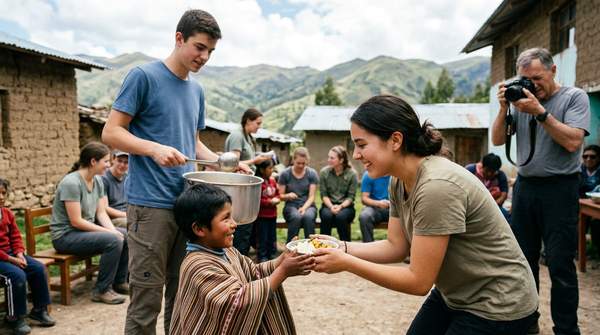
Choosing a Christian mission trip can feel exciting at first. Thirst Missions gives churches and groups multiple opportunities to serve through Christ-centered mission experiences in destinations ranging from Alaska and Appalachia to Belize, Guatemala, and Puerto Rico, with newer Youth Collective options in Nashville and New Orleans for 2027.
Then the practical questions begin.
Where should the group go? What kind of ministry should they do? How long should the trip be? Will the destination fit the group's age and experience level? What will lodging look like? How much planning will leaders have to handle themselves?
There is no universal answer because there is no universal mission group.
The right Christian mission trip depends on the people going, the ministry goals of the church, and the kind of experience the group is prepared to embrace. Thirst Missions offers private mission trips in Alaska, Appalachia, Belize, Guatemala, and Puerto Rico, giving churches and groups several different environments in which to serve.
For 2027, Thirst Missions is also expanding its youth-focused opportunities with Youth Collective Mission Trips in Nashville and New Orleans.
Understanding what each type of experience offers can make the decision easier.
Start With the Group, Not the Destination
A common mistake is choosing a destination first.
Maybe the group has always wanted to visit Alaska. Perhaps Belize sounds exciting. Another church may want an international experience but needs to keep the trip straightforward.
Those preferences are understandable, but the better starting point is the group.
Who is going?
A youth group of teenagers may have different needs from an adult church team. A first-time mission group may need more structure than an experienced team. A church with a particular ministry focus may want opportunities that align with its existing strengths.
Before comparing destinations, identify the group's goals.
Are you looking for cross-cultural ministry? Community service? Children's ministry? Construction? Church partnerships? Spiritual growth? A combination of several experiences?
Once those priorities are clear, destinations become easier to evaluate.
Alaska: Serving in a Distinctive Environment
Alaska offers an environment that is dramatically different from many other mission-trip destinations.
Thirst Missions provides opportunities for groups to serve alongside local churches and ministries, including ministry in remote and rural communities. Its Alaska trips can include customized ministry, cultural orientation, service projects, worship, and local church partnerships.
For groups drawn to outdoor environments and communities that may be geographically remote, Alaska can provide a distinctive mission experience.
The setting is memorable, but the focus remains ministry.
That distinction matters.
A mission trip should not become a sightseeing vacation with a service project attached. Recreation can be part of a well-rounded trip, but ministry and relationships remain central to the experience.
Appalachia: Meaningful Ministry Close to Home
A church does not need to cross an international border to experience a different culture or encounter meaningful ministry opportunities.
Thirst Missions' Appalachia trips take place in Southeast Kentucky, where teams work with local churches and pastors and can participate in ministry opportunities such as home repair, children's ministry, and community service.
For some groups, Appalachia may provide an ideal first mission experience.
Travel logistics can be simpler than an international trip, while the ministry environment still encourages participants to step outside their normal routines.
It can also challenge assumptions.
People sometimes imagine missions as something that happens far away. Appalachia demonstrates that communities with significant ministry needs exist within the United States as well.
Belize: Cross-Cultural Ministry With Strong Relationships
Belize offers groups an international mission experience in an English-speaking country with opportunities to engage with local churches, schools, families, and communities.
Thirst Missions has longstanding ministry relationships in Belize and describes opportunities that can include church and school ministry, home visits, and community service.
For groups looking for an international experience, Belize can combine cross-cultural learning with relational ministry.
That combination is important.
Students and adults can experience another culture while still having opportunities to communicate, serve, worship, and build relationships.
The experience can encourage participants to recognize that Christian community extends far beyond their home church.
Guatemala: Learning Through Culture and Ministry
Guatemala provides another opportunity for groups to experience international missions while engaging with local churches and communities.
Thirst Missions' Guatemala trips can include customized ministries, service projects, cultural orientation, local church partnerships, worship, and devotional experiences.
For participants, the cultural component can be an important part of the learning experience.
Traveling somewhere unfamiliar encourages people to observe before assuming.
How do people worship? What does community look like? What traditions shape daily life? How do local churches serve their neighborhoods?
Those questions can make a mission trip educational as well as practical.
The goal is not simply to visit another country.
It is to serve with humility and learn from the people who live there.
Puerto Rico: Ministry Within a U.S. Territory
Puerto Rico offers another distinctive option for groups that want a cross-cultural experience without leaving U.S. territory.
Thirst Missions provides opportunities for groups to participate in ministry through local church and community partnerships, with experiences that can include service, outreach, cultural learning, and relationship-building.
For churches with participants who may be new to international travel, Puerto Rico can be an interesting way to experience a different cultural environment while remaining within a U.S. territory.
Again, the destination is only part of the decision.
The ministry relationships and opportunities should remain the primary consideration.
Nashville and New Orleans: A New Option for Youth Groups
For youth ministries planning ahead for 2027, Thirst Missions has introduced Youth Collective Mission Trips in Nashville and New Orleans.
These experiences were created specifically for youth groups and Christian schools and combine daily ministry with spiritual growth, relationships, cultural experiences, recreation, lodging, meals, and on-site staff leadership.
Nashville opportunities include community outreach, food distribution, homeless ministry partnerships, service projects, prayer ministry, and local church partnerships. New Orleans offers opportunities involving food pantry ministry, community outreach, service projects, prayer ministry, homeless outreach, and local partnership ministries.
This format can appeal to youth leaders looking for a structured experience specifically designed around students.
Rather than coordinating every detail independently, groups can participate in a planned mission environment while still having opportunities to experience the character of the destination.
Consider What Happens Between the Projects
When comparing mission trips, it is easy to focus exclusively on ministry activities.
But the moments between those activities can shape the experience just as much.
How does the group worship together? How are students encouraged to process what they experience? Is there cultural orientation? Do participants have opportunities to talk with local ministry partners? Is there space for reflection?
Thirst Missions incorporates evening worship, guided debriefs, Scripture-based devotions, cultural orientation, and relational experiences into its mission-trip model.
These elements can help participants connect service with spiritual growth.
A student may complete a project during the afternoon but only understand its deeper significance during an evening conversation.
Think About the Level of Support Your Leaders Need
Mission-trip planning can become a major undertaking.
There are transportation arrangements, lodging, meals, schedules, ministry placements, participant communication, preparation, and countless smaller details.
For a church leader already balancing weekly ministry responsibilities, that can become overwhelming.
Thirst Missions provides pre-trip consultation, promotional and participant materials, detailed itineraries, online trip information, mission-trip consultants, staff leadership, and other logistical support depending on the trip.
That allows group leaders to focus more of their attention on people.
The organization describes its mission as handling many of the behind-the-scenes details so groups can concentrate on ministry and relationships.
Choose the Experience That Fits Your Calling
The best mission trip is not necessarily the most exotic.
It is not automatically the cheapest.
It is not always the destination everyone has heard about.
The right mission trip is the one that gives your group an opportunity to serve meaningfully, partner respectfully with local Christians, grow spiritually, and build relationships.
For one church, that may mean serving in Appalachia. For another, it may mean traveling to Belize or Guatemala. A youth ministry may choose Alaska or Puerto Rico, while another may find the Youth Collective model in Nashville or New Orleans to be the best fit for its students.
The important thing is to begin with purpose.
Ask what your group needs. Ask where your ministry strengths can be useful. Ask what kind of environment will challenge participants in healthy ways. Ask how the organization works with local churches and ministry leaders.
Then choose the destination.
A Mission Trip Can Become Part of a Bigger Story
A week of missions can be memorable.
But the real value may be what happens afterward.
Students may become more willing to serve at home. Adults may become more involved in their church's missions ministry. A group may develop an ongoing relationship with a local ministry partner. Participants may return with a broader understanding of Christian community and a deeper appreciation for the people they encountered.
That is why choosing a mission trip deserves thoughtful consideration.
Thirst Missions offers several environments in which groups can serve, but the destination is never the whole story.
From Alaska to Appalachia, Belize to Guatemala, Puerto Rico to the Youth Collective cities of Nashville and New Orleans, each experience creates a different setting for the same larger purpose: helping people put faith into action through service, relationships, and ministry.
When a group chooses its destination with that purpose in mind, the trip becomes more than a week away.
It becomes an opportunity to serve with intention, grow together, and see what can happen when faith moves beyond the church building and into the community.