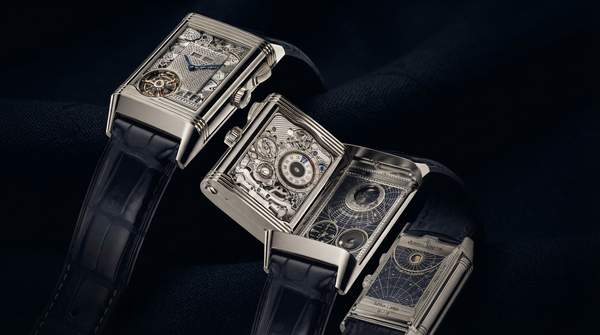
In the most rarefied echelons of high horology, beyond the simple telling of hours and minutes, lie mechanical marvels that represent the absolute zenith of the watchmaker’s art. These are the grand complications, intricate mechanisms that do more than measure time—they master it, interpret it, and connect it to the world around us. Among the most revered of these are three distinct achievements: the minute repeater, which translates time into sound; the split-seconds chronograph, which dissects moments with unparalleled precision; and the astronomical complication, which maps the grand cycles of the cosmos onto the wrist. For the discerning collector, understanding the unique genius, historical purpose, and profound complexity of each is the first step toward true appreciation of these horological masterpieces.
The Apex of Mechanical Artistry
In the lexicon of watchmaking, any function on a watch that goes beyond displaying the hours, minutes, and seconds is termed a "complication." These can range from a simple date window to far more elaborate mechanisms. The minute repeater, split-seconds chronograph, and astronomical displays belong to the highest and most exclusive category, often forming the basis of what is known as a "grande complication." While the exact definition can be debated, a consensus among horologists holds that a true grande complication timepiece must contain functions from three distinct categories: timing, such as a chronograph; calendar or astronomical functions; and a striking mechanism, like a minute repeater.
The creation of such a watch is a monumental undertaking, often requiring hundreds of minuscule, hand-finished components working in perfect harmony within a space no larger than a few cubic centimeters. These complications are not mere features; they are the embodiment of a watchmaker's ambition and a testament to a tradition of solving complex problems through pure mechanical ingenuity.
Minute Repeater: The Symphony of Time
The minute repeater is an acoustic masterpiece, a complication born from a world before electric light. Its primary function is to chime the current time on demand, translating a visual reading into a beautiful and distinct auditory sequence. According to a guide from luxury watch dealer Gray & Sons, this complication was ingeniously developed to solve the fundamental problem of telling time in the dark. By activating a slide or pusher on the case, the owner sets in motion a complex internal ballet of racks, snails, and levers.
This miniature machine reads the time from the position of the hands and triggers a series of tiny, precisely tuned hammers to strike two different gongs. Typically, a low tone sounds for each hour, a double-tone sequence marks each quarter-hour, and a high tone counts the remaining minutes. The result is a personal, mechanical symphony that announces, for example, that the time is 2:49 with two low chimes, three double-chimes, and four high chimes. The skill required to create a repeater with clear, harmonious tones and a reliable mechanism makes it one of the most challenging and prized complications in all of watchmaking.
Split-Seconds Chronograph: Precision in Parallel
While a standard chronograph acts as a stopwatch, the split-seconds chronograph, also known by its French name rattrapante, represents a significant leap in mechanical complexity and practical utility. This advanced timing complication is distinguished by its two superimposed central seconds hands. According to the Fondation de la Haute Horlogerie, this dual-hand system allows a user to measure intermediate times or time several events that begin simultaneously but conclude at different moments. When the chronograph is started, both hands travel together. A press of a dedicated pusher stops one hand to mark a specific interval—such as a lap time—while the other continues its sweep.
A subsequent press causes the stopped hand to instantly fly back and rejoin the running one, an action that gives the complication its name from the French verb rattraper, meaning "to catch up." As journalist Roberta Naas explains for Worthy, this makes the split-seconds chronograph a "much more complex timing complication" than its standard counterpart, enabling the wearer to time multiple concurrent events. This functionality was historically invaluable in fields requiring precise interval measurement, from horse racing to aviation, and its intricate, delicate mechanism remains a benchmark of a watchmaker's technical prowess.
Astronomical Complications: The Cosmos on Your Wrist
Astronomical complications are perhaps the most intellectually and philosophically profound, connecting the terrestrial measurement of time to the vast, predictable rhythms of the heavens. These mechanisms distill the universe onto the watch dial, tracking and displaying a variety of celestial phenomena with remarkable mechanical accuracy. As detailed by Gray & Sons, these displays can take many forms. Some watches feature star charts that depict the night sky as seen from a specific location, while others include sunrise and sunset indicators customized to the wearer's home city.
A particularly sophisticated function is the equation of time, which illustrates the difference between "true" solar time (the irregular time measured by a sundial) and the standardized 24-hour day we use. Still others may track sidereal time, a scale based on the Earth's rotation relative to distant stars rather than the sun. Each of these displays requires incredibly complex gear trains and calculations to model the non-uniform orbits and movements of celestial bodies, transforming the watch from a simple time-telling device into a portable planetarium and a tribute to the enduring human quest to understand our place in the cosmos.
Complication Comparison: Function, Purpose, and Appeal
To fully grasp the distinct character of these horological achievements, it is useful to compare them directly. Each was conceived to solve a different problem, provides a unique type of information, and consequently holds a specific appeal for collectors. The minute repeater offers an auditory and romantic solution to a pre-industrial problem. The split-seconds chronograph provides an analytical tool for mastering precision in a dynamic world. The astronomical complication presents a philosophical and scientific model of the universe. Their differences highlight the breadth of what mechanical watchmaking can achieve.
| Complication | Core Function | Original Problem Solved | Key Feature for Collectors |
|---|---|---|---|
| Minute Repeater | Chimes the hours, quarters, and minutes audibly on demand. | Enabled telling time in complete darkness or without sight. | The intricate mechanical artistry required to translate time into a precise and pleasing sound. |
| Split-Seconds Chronograph | Times multiple events or intermediate laps with two separate seconds hands. | Allowed for the precise measurement of concurrent events with different end points. | The mechanical ingenuity of the "catch-up" mechanism and its application in precision timing. |
| Astronomical Complication | Displays celestial information such as star charts, moon phases, or sunrise and sunset times. | Provided an accurate, portable model for tracking complex celestial cycles. | The ability to distill the vastness of the cosmos into a mechanical display on the wrist. |
Choosing Your Horological Masterpiece
The minute repeater, split-seconds chronograph, and astronomical complications each stand as a monument to human ingenuity, offering different perspectives on the nature of time. One gives it a voice, another dissects its smallest fractions, and the third aligns it with the eternal dance of the cosmos. Discerning collectors should evaluate these grand complications based on their personal appreciation for auditory artistry, precision timing, or celestial observation. The choice is not merely about acquiring a function but about aligning with the philosophy behind the mechanism. A collector's decision to acquire a watch with one of these complications, or their ability to articulate the distinct merits of each in horological discussions, serves as the ultimate indicator of a deep and sophisticated appreciation for the pinnacle of this timeless craft.
Sources
- The Ultimate Guide to Luxury Watch Complications: Popular Examples — GrayAndSons.com
- FHH — Hautehorlogerie
- What Are Watch Complications — Worthy