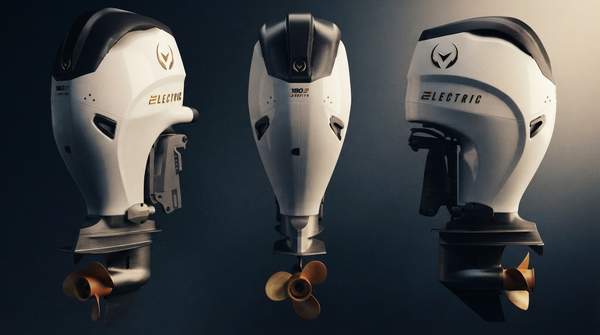
Electric yacht propulsion is not a motor swap. It is an integrated system in which the motor, battery bank, controls, propeller, hull, charging system, and the person at the helm must all be matched to one another to work well. Get that matching right, and the reward is quiet, odour-free running with enormous torque at low speeds. Get it wrong, and the central trade-off of the technology—battery capacity versus cost, range, and speed—becomes expensive. Here is how the pieces fit together, and where the compromises lie.
Electric Yacht Propulsion: An Integrated System
The most common misconception, according to Elco Motor Yachts—a builder whose electric-launch heritage dates to the 1893 World's Columbian Exposition in Chicago—is that a single component makes the system work. In reality, "it's the relationship between the motor, batteries, controls, propeller, hull, charging system, and the person operating the boat." When those pieces are properly matched, electric propulsion becomes more than an alternative way to power a boat; it becomes a different way to experience being on the water.
Use this framework to see how each component contributes to the whole:
| Component | Function | Integration and impact |
|---|---|---|
| Electric motor | Converts stored electrical energy into mechanical power to drive the propeller | Delivers full torque at low speeds; in hybrid systems, works alongside or independently of combustion engines |
| Battery bank | Stores the electrical energy that powers the motor and onboard systems | Its capacity sets the vessel's range and speed—and dominates system cost and weight |
| Controller / management system | Manages power distribution, motor speed, and energy flow between components | Smart energy management optimises efficiency and the operator's experience |
| Charging system | Replenishes the battery bank, including solar panels and regeneration while sailing | Determines how quickly the yacht returns to full capability between passages |
| Propeller and drivetrain | Translates motor power into thrust | Must be matched to the motor's characteristics and the hull to avoid wasted energy |
The framework's key insight: no single component determines performance. Range, efficiency, and handling emerge from how these parts interrelate—and how well they suit the hull and the owner's actual usage.
Electric Motors: The Powerhouse
The motor is where the system's character is most visible. Unlike a combustion engine, which must build revolutions to reach its power band, an electric motor delivers its maximum torque almost immediately. Yachting World's Rupert Holmes, writing about the technology, highlights "a huge amount of torque at low speeds that can make difficult manoeuvres in tight spaces a lot less daunting."
That low-speed torque changes everyday seamanship. In Holmes's sea trial of the Xc 47, holding station against a 15-knot headwind while sorting lines and fenders used only 300–500 watts of propulsion power, and he calculated the battery bank could have sustained that for around 100 hours. Harbor maneuvering, once the most stressful part of a passage, becomes nearly effortless.
Battery Banks: Energy Storage and Capacity
The battery bank is the system's heart—and its heaviest constraint. Sunreef Yachts, whose ULTIMA hybrid line spans models from 44 to 88 feet with a flagship Ultima 111 in development, describes its approach as "the industry's lightest custom-engineered marine batteries," paired with lithium-ion chemistry. The emphasis on lightness is telling: battery weight and capacity drive everything else.
Capacity determines how far and how fast the yacht can travel between charges. But capacity is not free. Every additional kilowatt-hour of storage adds cost and weight, and weight in turn demands more energy to move. This is why battery sizing must start from the owner's real usage pattern, not from a headline range figure.
Control and Management Systems: The Brains of the Operation
Between battery and motor sits the control system, which governs power distribution, motor speed, and the flow of energy between components. Elco's account of the technology emphasises that what has changed dramatically since the late nineteenth century is "the technology available to store, manage, and deliver electrical energy"—management being the word that separates a modern system from a historical one.
A well-designed management system protects the battery bank, modulates throttle response smoothly, and coordinates hybrid operation when a combustion engine shares the drivetrain. For the operator, its work is mostly invisible: the boat simply responds as expected, without the lag or noise of a conventional installation.
Charging and Regeneration: Sustaining Power
Charging is where electric yachting diverges most sharply from electric motoring. Yachts carry their own refuelling infrastructure. Holmes points to "the ability to recharge batteries—effectively refuelling while sailing using only the wind"—meaning a sailing yacht's propeller can act as a generator under sail, feeding energy back into the bank.
Solar power extends this independence. Sunreef's in-house solar system, integrated into the ULTIMA line, supplements shore charging and regeneration. Together, these pathways mean a well-matched system can return to full charge without a marina visit—provided the owner's passages leave time for wind and sun to do their work.
Propeller and Drivetrain: Translating Power to Movement
The final link converts electrical power into thrust. The propeller and drivetrain must be matched to the motor's torque curve and to the hull's resistance; an efficient pairing preserves range, while a mismatched one squanders the battery's stored energy. Elco's systems view places the propeller and hull alongside the motor and batteries as equal partners in the relationship that defines performance. This is also why retrofit conversions require careful engineering: an existing hull and drivetrain impose constraints that a purpose-built electric yacht avoids.
Beyond Green: Practical Advantages and Key Trade-offs
Environmental appeal draws attention, but it is not what closes sales. Holmes observes that "a growing number of yacht buyers are opting for electric propulsion for reasons other than its apparent green credentials," citing quiet and odour-free running, space savings, reduced maintenance, and low-speed torque. Elco adds that electric systems "remove several familiar engine maintenance tasks."
The trade-off is quantifiable. Yachting Monthly's Duncan Kent reports that the cost of a complete pure electric drive system "depends on how far and how fast you want to motor between battery charges. The greater the range or faster the speed required, the more battery capacity you'll need." His figures for a typical 40hp diesel replacement: roughly £20,000 including parts and installation; £15,000–£25,000 for a DIY pure-electric installation depending on battery count; and £30,000–£45,000 for a professionally designed and installed system. Range and speed ambitions translate directly into battery capacity, and battery capacity translates directly into pounds spent and weight carried.
Navigating the Trade-offs: Making Informed Choices
Prospective yacht owners and enthusiasts should evaluate electric propulsion systems by considering the balance between initial cost, desired range, and cruising speed, alongside the practical benefits. The decision is not "electric versus diesel" in the abstract; it is a specific question about how you actually use the boat.
The observable signal for an informed decision is a clear understanding of how battery capacity directly impacts both the upfront cost and the operational range and speed capabilities of an electric yacht. Start from your typical passage length and cruising speed, price the battery capacity those demands require using figures like Kent's £15,000–£45,000 installation range, and only then weigh that against the quiet running, low-speed torque, and reduced maintenance that owners and testers consistently report. If the numbers close, the integrated system behind them is ready to deliver.
Sources
- Understanding Electric Boat Propulsion: How It Works and Why It Matters — Elco Motor Yachts
- ‘Electric yacht propulsion opens doors to a completely different way of thinking about sailing’ — Yachting World
- Hybrid Yachts Take the Helm with Their Fusion of Power and Eco-Consciousness — Sunreef Yachts
- How to convert a yacht to electric propulsion — Yachting Monthly