Authenticating a rare spirits bottle demands a multi-layered approach: careful physical inspection, a documented history, and, for newer bottlings, modern security technology. No single non-destructive check is definitive on its own, but together they let a collector catch the most common red flags before money changes hands. Fake bottles of rare whisky and spirits do occasionally appear on the market, as Elixir Distillers — a bottler of rare Japanese whisky — warns its own customers, which is why verification matters most on high-value secondary market purchases. This guide focuses on non-destructive techniques you can perform yourself; it is not legal or financial investment advice, and the tax strip details apply primarily to US-bottled whiskeys.
The Stakes of Authenticity in Rare Spirits
Authentication verification becomes essential before committing substantial capital to secondary market purchases, as the team at The Really Good Whisky Company puts it in their guide to rare bottlings. The stakes are asymmetric: a counterfeit may be worthless, while a genuine rarity commands its price precisely because its legitimacy is beyond doubt. Provenance is the first line of defense against counterfeiting, according to The Spirits Club, a company that deals in investment-grade bottles. Authentic high-value bottles are often accompanied by detailed documentation, such as the bottle's history, certificates of authenticity, and original receipts, which provides essential protection against counterfeit materials. While purchasing from companies that professionally operate in the field of investment spirits can significantly reduce the risk of buying a fake product, independent verification still belongs in the collector's own hands.
Physical Inspection: Decoding the Bottle's Clues
Begin with the bottle itself, working through labels, seals, glass, and — for American whiskeys — tax strips. Labels should be precise, clear, and free from smudges or misalignments, and the paper's quality and aging should be consistent with the bottle's purported age. Minor imperfections can occur on genuine vintage bottles, but significant discrepancies are red flags. The seal or closure must be intact, showing no signs of tampering, leakage, or replacement; even minor damage can indicate tampering or evaporation.
The glass tells its own story. The collector resource whiskeyid.com and the bourbon history writer behind bourbonveach.com both note that embossed details matter: after Prohibition, some glass bottle companies embossed the year the bottle was made on the bottom, but not all did. Crucially, an embossed date marks the glass manufacturing year, not necessarily the bottling year — a distiller may bottle a brand using glass made the year before. Pre-1932 regulations also permitted some brands in unusual bottle sizes, before standard sizes were mandated, so an odd size on a later bottle deserves scrutiny.
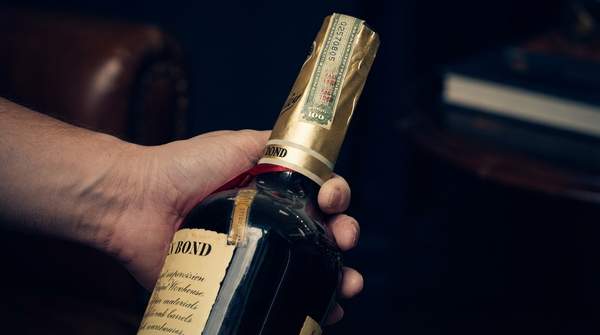
For US whiskeys, tax strips are among the most datable features. According to whiskeyid.com's dating guide, green strips indicate bottled-in-bond whiskey and show the distillation and bottling years, if not faded away over time; red strips indicate non-bonded whiskey and do not show the years; blue strips were for export out of the US only, though not all exports used them. Green bonded strips were discontinued starting December 1, 1982, and prior to 1973 they also denoted the bottle size on one end. The site cautions that "faux" strips exist and were brand specific, so strips demand careful scrutiny rather than mere presence.