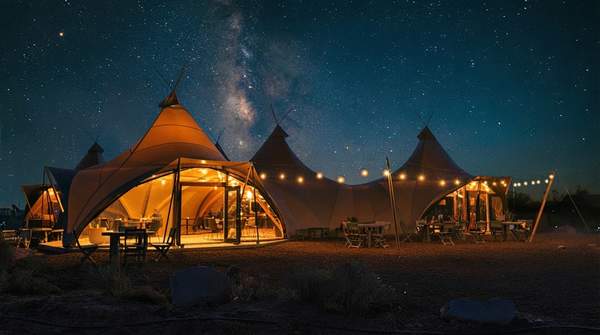
The core decision in luxury dark-sky travel is architectural. A permanent lodge or resort delivers traditional high-end hospitality, expert-led astronomy programs, and integrated telescopes, but its fixed walls, rooflines, and lighting can work against the very darkness you traveled for. A luxury tented structure trades some conventional hotel polish for open sightlines, remote placement, and a lighter footprint. Dome-style glamping units push that immersive logic further with panoramic design. Here is how the three models compare, and where DarkSky Approved certification fits in.
Introduction to Luxury Dark-Sky Tourism
Luxury dark-sky tourism has grown into a distinct premium category rather than a niche curiosity. Market analysis by HTF Market Intelligence describes experiences spanning luxury dark-sky resorts, high-end glamping accommodations, private stargazing retreats, guided astronomical tours, astrophotography experiences, and exclusive wilderness lodges near designated dark-sky parks and protected natural areas. The segment, the firm notes, integrates luxury hospitality, astronomy education, sustainable tourism practices, specialized optical equipment, and personalized travel services, serving affluent travelers, adventure tourists, astronomy enthusiasts, wellness seekers, and premium eco-tourism consumers.
What unites these travelers is a pursuit that is increasingly rare: according to DarkSky International, its lodging program recognizes operators providing overnight accommodation where the Milky Way is visible, "an increasingly rare experience for much of the world's population." Within that shared goal, though, the accommodation model you choose shapes nearly everything else — how much sky you actually see from your room, how much comfort surrounds you, and how much impact your stay leaves on the landscape.
Permanent Lodges and Resorts: Comfort and Amenities
The permanent model is the most recognizable form of luxury. These fixed properties pair conventional five-star service with astronomical programming: HTF Market Intelligence points to the integration of high-end telescopes, guided astrophotography, expert-led astronomy programs, and personalized nighttime excursions as the features enhancing the guest experience at such properties. Their location near designated dark-sky parks and protected natural areas means the surrounding region's darkness does much of the work.
The trade-off is built into the architecture itself. Writing for the luxury-tent manufacturer Tentickle, the article's author argues that traditional fixed buildings can actively undermine astronomy tourism: light pollution from permanent structures erodes the darkness guests seek, walls and fixed ceilings create visual barriers limiting sky exposure, high environmental footprints contradict the low-impact ethos of dark-sky destinations, and rigid positioning means a building cannot be reoriented toward the best sky views. That is a supplier's argument for its own product, but the structural logic — that a roofline is a permanent obstruction — holds regardless of who makes it. A resort room may offer every amenity except the one you came for: an unbroken view upward.