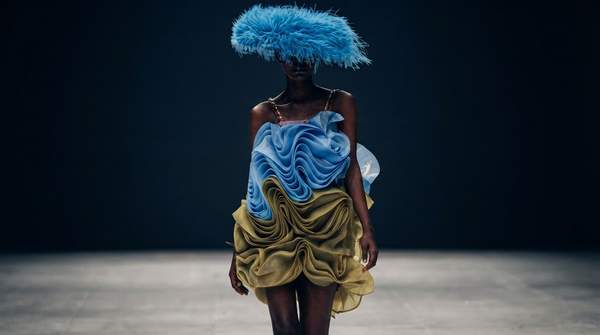
African designers are reshaping high fashion through three distinct routes: official Parisian couture recognition, intellectually driven luxury ready-to-wear, and a bold fusion of French tailoring with Central African visual language. Imane Ayissi, Thebe Magugu, and JmakxParis each occupy a different position in this movement, and understanding their differences matters more than any general trend story. This comparison sets out what distinguishes each designer's craft, heritage, and thematic focus.
The Rise of African Designers in Global High Fashion
Across the continent, a new generation of designers is redefining fashion, as ONOMO Hotels' profile of leading African talent puts it, "stitch by stitch" — blending ancestral techniques with contemporary design and embracing slow, sustainable practices that are carrying African creativity onto the global stage. The movement is not a single aesthetic. It spans handloomed textiles, narrative-driven ready-to-wear, and conceptual tailoring that borrows as much from football stadiums as from ateliers.
What unites these designers is a refusal to treat heritage as decoration. Whether the reference point is Cameroonian dance, South African political history, or Congolese football culture, each treats African material and memory as the structural core of luxury design rather than an exotic accent. That is also why the term "haute couture" needs widening here: only one of the three sits within the formal Parisian couture framework, yet all three work at a level of craft and concept that the couture tradition exists to honor.
Imane Ayissi: Parisian Recognition and African Heritage
Imane Ayissi is the most institutionally anchored of the three. A Paris-based Cameroonian designer, he fuses his African heritage with Parisian haute couture — the only designer in this comparison whose work is explicitly positioned within that Parisian framework. His path to fashion was unconventional: he began his career as a dancer with the Ballet National du Cameroun before pivoting to design.
His formation in luxury predates his label. Born to Cameroonian parents in 1969, Ayissi was a sought-after model who walked for Dior, Givenchy, Valentino, YSL, and Lanvin before starting his own fashion business. He draws inspiration from cultures across the African continent to create haute couture and luxury ready-to-wear pieces. Sustainability is central to his practice: he is an advocate for environmentally friendly fashion and often uses natural and organic materials chosen to make the least impact on the environment.
Thebe Magugu: Intellectual Storytelling Through Luxury
Thebe Magugu, a South African designer who founded his self-titled luxury label in 2016, represents a different model of African high fashion: one built on narrative. Through fashion, Magugu tells the stories of his heritage and culture while bringing difficult social issues into the limelight. His collections have offered commentary on sexism in South Africa, the country's apartheid past, and femicide — themes that give his clothes an intellectual weight beyond their silhouettes.
His standing in global fashion was cemented by the LVMH Prize, which he won in 2018, an award given to young designers by leading figures in the industry. He has since been featured in Paper, Another Mag, and Vogue, and he primarily designs ready-to-wear clothing for women. Unlike Ayissi, Magugu is not identified in the reporting as part of the official Parisian haute couture calendar — his prestige rests on storytelling and editorial recognition rather than couture membership.