Luxury yacht interiors have reached a turning point. The defining trends of the current design cycle are no longer purely aesthetic: sustainable materials and seamlessly integrated smart technology now shape how leading shipyards and designers specify a cabin, a saloon, or a full new build. The good news for prospective owners is that these two shifts are measurable. You can ask for specifics — recycled PET foam, linen fiber, low-flow fixtures, single-interface climate control — and quickly separate genuine commitment from marketing language.
The New Era of Luxury: Sustainable and Smart Yacht Interiors
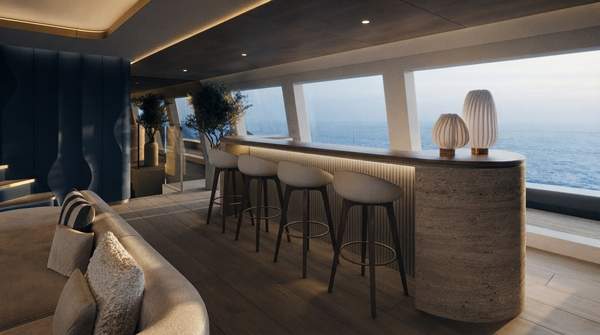
The industry's framing has changed. Coverage of current interior design from the Qatar Boat Show describes aesthetic choices grounded in a balance between sophistication and function, with marine lifestyle elements like driftwood accents and artisanal floorboards sourced from sustainable supplies. That synthesis — tactile warmth paired with responsible sourcing — is now the baseline expectation rather than a niche preference.
What makes this era distinct is that environmental responsibility and technology are converging on the same brief. Sunreef Yachts, for instance, states that cutting-edge technology is integrated into every aspect of its interiors to enhance both comfort and sustainability, while the shipyard also frames eco-responsible materials as central to its décor. The practical consequence for an owner is that material choices, onboard systems, and control interfaces are increasingly evaluated together, not as separate line items in a build specification.
Eco-Luxury Defined: Materials and Systems for a Greener Voyage
The most concrete example of sustainable interior engineering comes from Sunreef. Its research and development team integrates recycled PET bottles into production, and the shipyard reports that up to 150,000 recycled PET bottles are used to create the interior of a Sunreef 80. The resulting PET foam achieves a 60% weight reduction compared to traditional plywood solutions, which the shipyard says reduces fuel consumption. It is fully recyclable, eliminates non-recyclable adhesives, and integrates with traditional wood, paint, and laminate finishes.
Other materials in the sustainable palette include linen fiber, which Sunreef describes as a non-toxic, low-carbon-footprint green alternative to glass fiber, and reclaimed teak salvaged from old houses, boats, or other wooden structures. Compressed paper-based materials can serve for countertops — weight-efficient, solid, and easy to repair since scratches can be removed by applying heat. Designer Giovanni Soleti, writing for Pianta Design, notes that lightweight engineered stone and American Walnut or sustainable European Oak are current cabin favorites, while teak remains prized for its natural oils and rot resistance.
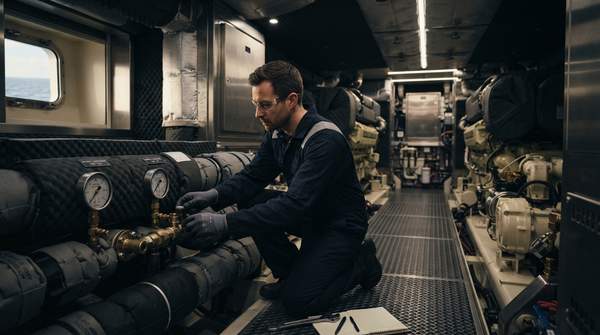
Systems matter as much as surfaces. Sunreef lists energy-efficient LED lighting, state-of-the-art insulation, custom HVAC optimized for salt-laden, high-humidity conditions, desalination systems, low-flow fixtures, advanced waste management, and water purification as elements of its eco-conscious models. Freshwater is limited onboard, so water-saving systems carry real operational weight.
Seamless Living: The Integration of Smart Technology
Smart technology in yacht interiors is defined by consolidation rather than gadgetry. Sunreef's approach puts lighting, climate, entertainment, and security under a single interface, often controlled via mobile or voice-activated devices. The promise is an intuitive, personalized onboard living experience rather than a collection of separate remotes and panels.
Adaptability is the second theme. SuperYachtsMonaco's survey of current designs highlights voice-controlled lighting and climate systems, hidden entertainment centers, and convertible furniture, noting that interiors now adapt to users' needs in real time and that these features are no longer confined to larger vessels. Materials are getting smarter too: Soleti reports that by 2026, smart textiles with self-cleaning properties have become a standard solution, inhibiting fungal growth at the molecular level — a meaningful advantage in humid marine environments. Setag Yachts, in its 2026 trend outlook by Ellie Gates, argues technology should be seamless and added only where it genuinely improves daily life on board.
Contrasting Philosophies: Setag's Integrated Standard vs. Sunreef's Eco-Specialty
Not every builder arrives at sustainability the same way, and understanding the two dominant philosophies helps you align with the right partner. Sunreef represents "eco-luxury as a specialty": the shipyard positions itself as a pioneer in eco-luxury yachting, with a dedicated Sunreef Yachts Eco program, branded recycled-material initiatives like the PET-bottle interiors, and a stated commitment to reducing animal skins in favor of natural fabrics and leather alternatives.
Setag Yachts represents "integrated as standard." In its 2026 trends piece, the company states that sustainability has long been embedded in its specification process rather than treated as an optional add-on, and that specifiers should explore the environmental impact of products as a matter of course — regardless of whether the client prioritizes it. Setag describes this mindset as no longer progressive but "simply good practice," and names specific materials it specifies frequently, such as Luna carpet by Rols, from manufacturers it says marry environmental responsibility with luxury.
The distinction is practical. One philosophy sells sustainability as a signature; the other treats it as hygiene in every decision. Neither is wrong, but the builder's framing should match your own priorities — and you should expect evidence either way.
Decision Framework: Evaluating Sustainable and Smart Yacht Interiors
Use the matrix below to cross-reference what a builder proposes against the core principles of sustainability and smart integration. Each cell lists observable features to request in a design proposal; the final column shows which philosophy tends to emphasize each area.
| Design Area | Sustainability Features to Look For | Smart Technology Features to Look For | Typical Philosophy Emphasis |
|---|---|---|---|
| Materials & Finishes | Recycled PET foam, linen fiber, reclaimed teak, compressed paper-based countertops, natural fabrics and leather alternatives, sustainable oak or walnut | Smart textiles with self-cleaning, anti-microbial properties that inhibit fungal growth | Both: Sunreef as specialty materials; Setag as standard specification practice |
| Onboard Systems | LED lighting, advanced insulation, marine-optimized HVAC, desalination, low-flow fixtures, waste management and water purification | Single-interface monitoring of shipboard systems via mobile or voice control | Primarily eco-specialty programs such as Sunreef Yachts Eco |
| Control & Ambiance | Energy-efficient lighting and climate design reducing consumption | Unified control of lighting, climate, entertainment, and security; voice control; convertible furniture; hidden entertainment centers | Both, with Setag adding technology only where it improves daily life |
The reasoning path is straightforward: materials answer whether the environmental claim is tangible, systems answer whether resource use is genuinely managed, and controls answer whether technology serves living rather than complicating it. A proposal that is vague in one row is telling you where that builder's commitment ends.
Key Questions for Your Next Yacht Project
Armed with the framework, your conversations with builders and refit designers should get specific. Ask which recycled or natural materials are proposed, by name, and what their weight and durability properties are — a PET foam interior, for example, should come with the weight-reduction comparison. Ask how water is managed: desalination, low-flow fixtures, and waste management should appear in the specification, not the brochure.
On technology, ask whether lighting, climate, entertainment, and security sit behind one interface, and whether it works by mobile or voice at sea. Finally, ask the philosophy question directly: is sustainability embedded in every specification decision, as Setag describes, or delivered as a defined eco program, as with Sunreef? The answer tells you what to expect when trade-offs arise mid-build.
Making Informed Choices for Your Sustainable and Smart Yacht
Prospective yacht owners should prioritize builders who transparently detail their commitment to sustainability through specific material choices and integrated smart systems, aligning with either an "integrated as standard" or "eco-luxury specialty" philosophy. The measurable indicator to insist on is the presence of detailed specifications for recycled and natural materials, energy and waste management systems, and comprehensive smart home integration in a builder's written design proposals. When those three items appear as named, quantified commitments — not aspirations — you have the evidence needed to proceed with confidence on your build or refit.
Sources
- Luxury Yacht Interiors: Design Trends for 2025 — Qatar Boat Show
- Yacht Interiors - Crafted for the Waves — Sunreef Yachts
- Sustainable Finishing Materials and Designs for Yachts — Sunreef Yachts Eco
- Pianta Design Park City Luxury Interior Designer
- Most Luxurious Yacht Interior Designs: 2026 Inspiration — SuperYachtsMonaco
- Top Yacht Interior Design Trends for 2026 — Setag Yachts